Why Growing Businesses Choose Custom Software Over SaaS
Published on April 12, 2026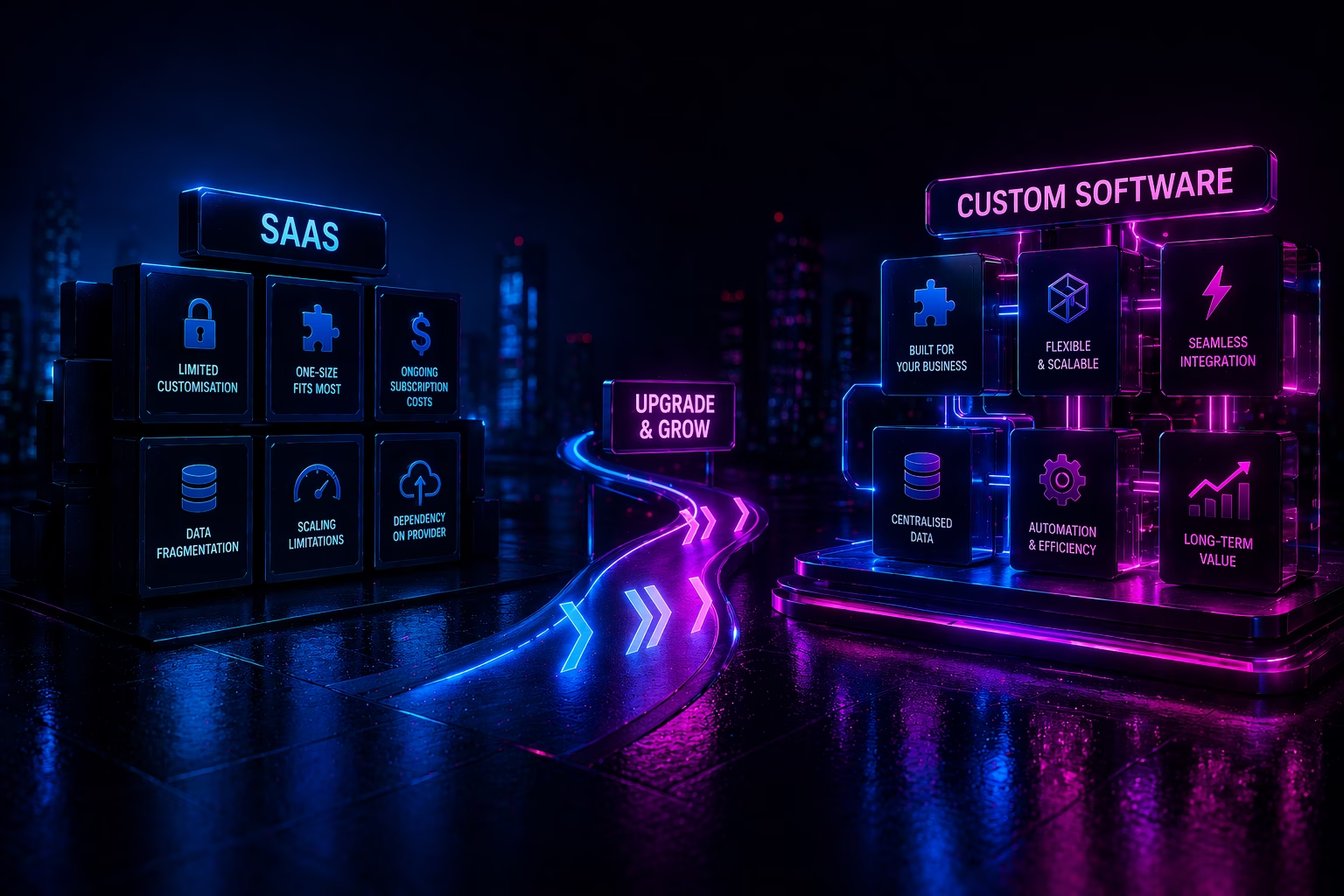
Custom Software vs SaaS: 7 Powerful Reasons Growing Businesses Make the Switch
Custom software vs SaaS is one of the most important decisions growing businesses face when scaling their systems. While SaaS platforms offer speed and convenience, they often introduce limitations that prevent businesses from operating efficiently as complexity increases.
Understanding the difference between custom software vs SaaS is critical if you want to build systems that support long-term growth rather than restrict it.
Table of Contents
- Why SaaS Works in the Early Stages
- When SaaS Starts Creating Limitations
- Custom Software vs SaaS: Key Advantages
- When to Switch from SaaS to Custom Software
- Final Thoughts
Why SaaS Works in the Early Stages
SaaS platforms are designed for accessibility and speed. Businesses can quickly deploy tools without investing in development, making SaaS an ideal starting point.
For early-stage operations, SaaS provides:
- fast setup and deployment
- predictable subscription costs
- minimal technical requirements
This is why many companies begin with SaaS solutions before evaluating custom software vs SaaS at a later stage.
When SaaS Starts Creating Limitations
As businesses grow, SaaS tools often begin to create friction rather than efficiency.
Common SaaS limitations include:
- restricted customisation
- disconnected systems
- manual data handling
- limited scalability
At this point, the custom software vs SaaS decision becomes unavoidable.
Many businesses realise they are spending more time working around their tools than benefiting from them.
For a deeper industry perspective, see
this Forbes article on build vs buy software decisions.
Custom Software vs SaaS: 7 Powerful Reasons to Switch
1. Custom Software Matches Your Workflow
Custom software vs SaaS becomes important when your processes are unique. Custom solutions are built around your workflow instead of forcing your business into rigid systems.
2. Custom Software Improves System Integration
Disconnected tools are one of the biggest problems with SaaS. Custom systems allow full integration through structured architecture and APIs.
Learn more about integration approaches at
IBM’s guide to APIs.
3. Custom Software Scales With Your Business
SaaS tools often hit limits as your business grows. Custom software evolves with your operations, making scalability far more effective.
4. Custom Software Improves Data Visibility
One of the biggest advantages in the custom software vs SaaS debate is visibility. Custom systems centralise data, making reporting clearer and more reliable.
See how this impacts performance in our article:
Why Data Visibility Matters More Than More Tools
5. Custom Software Reduces Manual Work
Manual processes often exist because SaaS cannot support complex workflows. Custom development removes this friction through automation.
6. Custom Software Gives You Full Control
With SaaS, you are limited by the provider. With custom software, you control features, integrations, and system behaviour completely.
7. Custom Software Becomes a Long-Term Asset
Unlike SaaS subscriptions, custom software becomes part of your business infrastructure, creating long-term value.
When to Switch from SaaS to Custom Software
You should consider switching when:
- your workflows no longer fit your tools
- your systems are disconnected
- you rely on manual processes
- reporting is slow or unreliable
- growth creates operational friction
If this sounds familiar, it may be time to explore
custom software solutions.
Final Thoughts
The custom software vs SaaS decision is not about choosing the most advanced option. It is about choosing the right system for your business.
SaaS is a powerful starting point, but it is not always the best long-term solution.
Businesses that transition at the right time gain a significant advantage in efficiency, scalability, and performance.
If you’re unsure which direction is right, explore more insights on our blog or get in touch to discuss your requirements.
DIGIDMN
Software Engineering & Enterprise Development