From Chaos to Clarity: How DIGIDMN Transforms Disconnected Business Systems
Published on April 12, 2026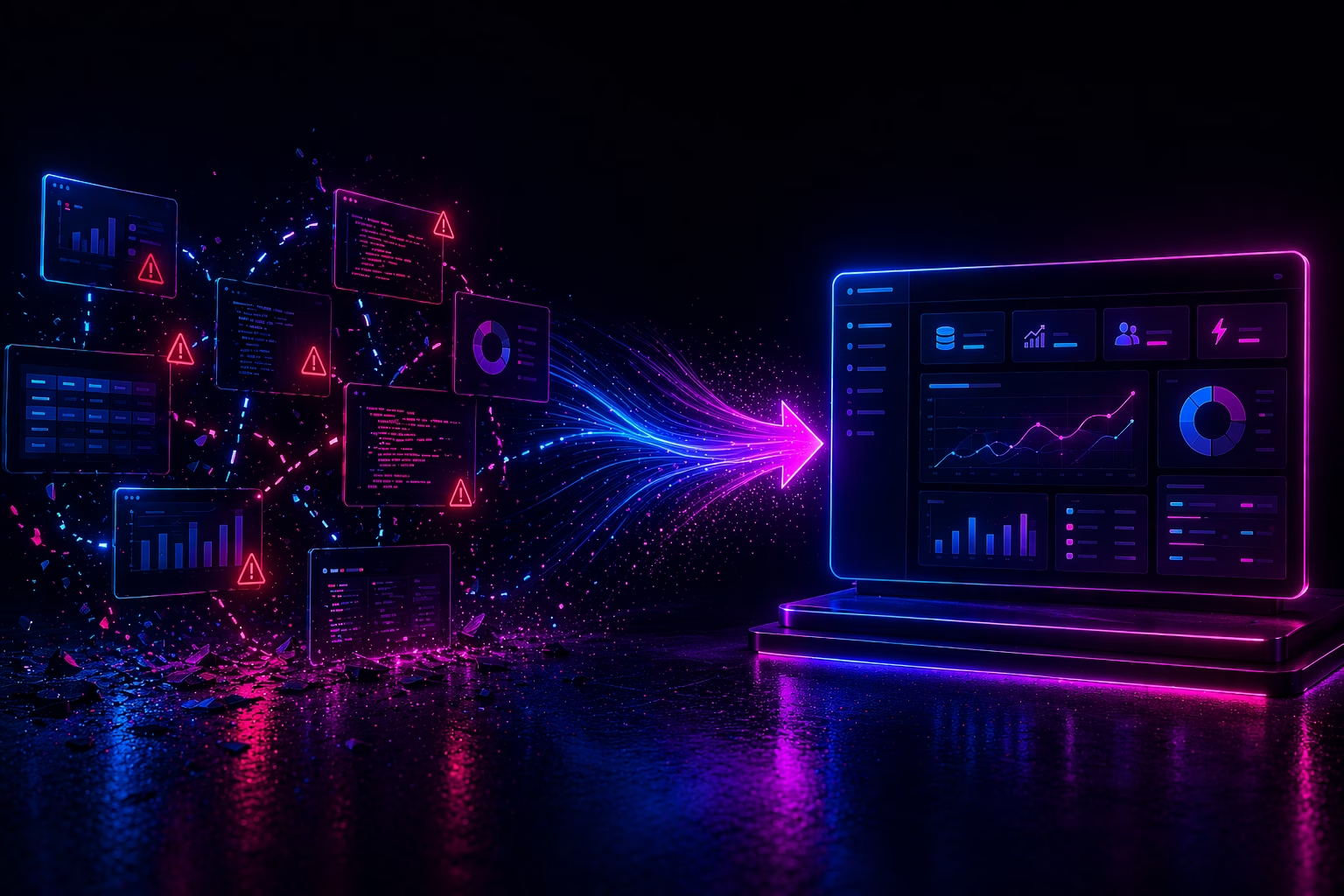
Disconnected business systems are one of the most common reasons growing companies struggle with inefficiency, poor visibility, and slow decision-making. While each individual tool may work well, the lack of integration between systems creates operational chaos.
At DIGIDMN, we specialise in transforming disconnected business systems into structured, scalable environments that improve performance across the entire organisation.
This is not about replacing everything.
It is about connecting what already exists and building the right foundation for growth.
Table of Contents
- What Are Disconnected Business Systems?
- Why Disconnected Business Systems Happen
- The Real Cost of Disconnected Systems
- How DIGIDMN Fixes Disconnected Business Systems
- Our 5-Step Transformation Process
- When You Need to Fix Your Systems
What Are Disconnected Business Systems?
Disconnected business systems occur when multiple tools operate independently without proper integration or shared data flow.
This often includes:
- separate CRM, finance, and operations platforms
- manual data transfer between systems
- inconsistent reporting across tools
Each system may function individually, but together they create inefficiency.
This is a core issue in modern digital transformation.
Why Disconnected Business Systems Happen
Disconnected systems usually develop over time.
As businesses grow, they adopt new tools to solve immediate problems without considering long-term integration.
Common causes include:
- rapid adoption of SaaS tools
- lack of system planning
- department-specific software decisions
- limited integration capabilities
For broader context, see
McKinsey insights on digital transformation.
The Real Cost of Disconnected Business Systems
Poorly integrated systems create hidden operational costs that impact performance across the business.
These include:
- duplicate data entry
- inconsistent information
- slow reporting processes
- lack of real-time visibility
- increased human error
Over time, these inefficiencies compound and limit growth.
This is closely related to the challenges discussed in
data visibility.
How DIGIDMN Fixes Disconnected Business Systems
At DIGIDMN, we take a structured approach to solving system integration challenges.
We focus on:
- understanding your workflows
- mapping system interactions
- identifying bottlenecks
- designing integration architecture
This ensures the solution is tailored to your business, not forced into a generic model.
Our work often involves API & Systems Integration to create seamless data flow.
Our 5-Step Transformation Process
1. System Audit
We analyse your current tools, workflows, and data structure to identify inefficiencies.
2. Workflow Mapping
We map how work actually moves through your business, not how it is assumed to move.
3. Architecture Design
We design a scalable system architecture that connects your tools effectively.
4. Integration & Development
We implement integrations and custom solutions to unify your systems.
5. Optimisation
We refine performance, improve automation, and ensure scalability.
For technical insight into integrations, see
Google Cloud architecture resources.
When You Need to Fix Your Systems
You likely have disconnected systems if:
- your teams use multiple tools that don’t communicate
- data needs to be manually transferred
- reporting is slow or inconsistent
- processes depend heavily on human intervention
If this sounds familiar, it may be time to
improve your systems.
Why Integration Matters for Scaling
As businesses grow, disconnected tools become harder to manage and more expensive to maintain. Without proper integration, teams spend more time moving data between systems than actually using it to make decisions. This slows down operations and increases the risk of errors.
Improving system connectivity helps businesses reduce manual work, improve accuracy, and create a more reliable flow of information across departments. Over time, this leads to better decision-making and more efficient operations overall.
Final Thoughts
Poor system integration is not just a technical issue.
They are a business performance issue.
The companies that solve this problem gain better visibility, improved efficiency, and stronger scalability.
At DIGIDMN, we help businesses move from chaos to clarity by building connected, scalable systems that support growth.
Explore more insights on our blog or get in touch to learn how we help businesses transform disconnected systems into connected, scalable operations.
DIGIDMN
Software Engineering & Enterprise Development