Data Visibility: 7 Powerful Reasons It Matters More Than More Tools
Published on April 12, 2026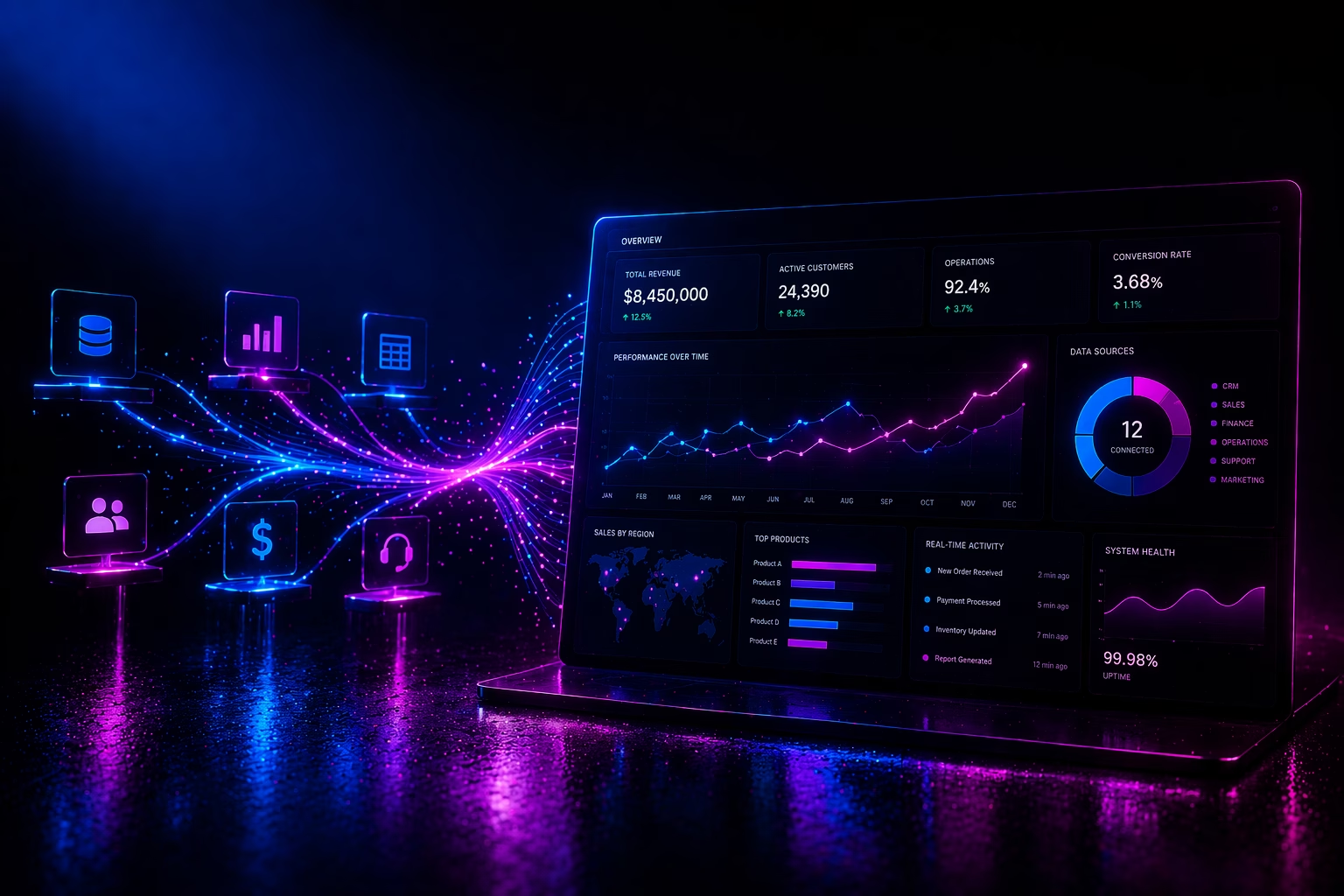
Data Visibility: 7 Powerful Reasons It Matters More Than More Tools
Data visibility is one of the most critical factors in how effectively a business operates, yet many companies continue to invest in more tools instead of improving how clearly they can see their data. Strong data visibility enables faster decisions, better alignment, and more scalable operations.
More tools do not solve poor visibility.
In fact, adding more systems often makes data visibility worse by increasing fragmentation, duplication, and complexity. Businesses end up with multiple dashboards, inconsistent reports, and unclear insights.
This is why data visibility matters more than more tools.
Table of Contents
- What Is Data Visibility?
- Why More Tools Fail to Improve Data Visibility
- 7 Powerful Benefits of Data Visibility
- The Real Problem: Fragmented Systems
- How to Improve Data Visibility
- What to Do Next
What Is Data Visibility?
Data visibility refers to how easily your business can access, understand, and act on its data across systems. Strong data visibility means information is clear, consistent, and available when needed.
This includes:
- real-time access to key metrics
- consistent data across systems
- clear reporting dashboards
- reliable data for decision-making
Without proper data visibility, even the best tools become ineffective.
For a broader industry perspective, see
IBM’s guide to data analytics.
Why More Tools Fail to Improve Data Visibility
Many businesses try to solve visibility problems by adding more tools.
This approach often leads to:
- multiple disconnected dashboards
- duplicate data across platforms
- inconsistent reporting
- manual data consolidation
Each new system introduces another data source, which reduces overall data visibility.
Instead of clarity, businesses get noise.
This is closely related to the challenges of
disconnected business systems.
7 Powerful Benefits of Data Visibility
1. Faster Decision-Making
Strong data visibility allows businesses to make decisions quickly without waiting for manual reports or validation.
2. Better Team Alignment
When everyone has access to the same data, teams stay aligned and work more efficiently.
3. Reduced Reporting Friction
Data visibility removes the need for manual reporting processes and reduces time spent compiling information.
4. Clear Identification of Bottlenecks
With proper data visibility, businesses can identify inefficiencies and performance issues more easily.
5. Improved Accountability
Clear data makes it easier to track ownership, progress, and performance across teams.
6. Stronger Automation
Automation depends on reliable data. Strong data visibility ensures systems operate accurately.
Learn more about automation at
Zapier’s workflow automation guide.
7. Scalable Growth
Businesses with strong data visibility can scale more effectively because they maintain control over their operations.
The Real Problem: Fragmented Systems
The biggest barrier to data visibility is fragmented systems.
Most businesses use multiple tools that do not communicate properly. This creates:
- data silos
- inconsistent metrics
- manual workarounds
This is why improving data visibility often requires better system integration rather than more software.
See:
API & Systems Integration
How to Improve Data Visibility
Improving data visibility requires a structured approach.
This typically involves:
- connecting systems through integration
- centralising key data sources
- removing duplicate data
- designing clear dashboards
- aligning reporting with business goals
This is where Digital Strategy Consulting becomes valuable.
The goal is not to add more tools, but to improve how data flows across your business.
What to Do Next
If your business struggles with data visibility, start by identifying:
- where data is fragmented
- which reports take too long to produce
- where decisions are delayed
- which systems overlap
From there, focus on improving structure before introducing new tools.
If you need help improving your data visibility, you can
get in touch.
Final Thoughts
Data visibility is not about having more data or more tools.
It is about having clear, reliable insight into how your business operates.
Businesses that prioritise data visibility make better decisions, move faster, and scale more effectively.
In many cases, the biggest improvement comes from simplifying systems, not expanding them.
Explore more insights on our blog to continue improving your systems.
Frequently Asked Questions
What is data visibility in business?
Data visibility refers to how easily a business can access, understand, and use its data across systems to make informed decisions.
Why is data visibility important?
Data visibility is important because it improves decision-making, reduces inefficiencies, and helps businesses scale more effectively.
How can businesses improve data visibility?
Businesses can improve data visibility by integrating systems, centralising data, and designing clear reporting structures.
Do more tools improve data visibility?
No. Adding more tools often reduces data visibility by creating fragmented systems and inconsistent data sources.
DIGIDMN
Software Engineering & Enterprise Development